THE PERFECT WATER
  • Water Problem
    • Contaminants
  • Water Solutions
    • Whole House
    • Digital alkaline reverse osmosis
    • ionized water system >
      • Platinum
      • Biontech
      • Platinum Genius
      • how to use the ionizer
    • Perfect Combination
    • Platinum Ionic Laundry
    • Platinum Air Purifier
    • Cookware >
      • Nutri-Stahl
      • Platinum
    • Natural Products home/personal
  • water test
  • Home Improvement
  • Reward
    • Referral Program
  • Financing
    • Apply
  • Contact
    • About Us
    • Join
    • Privacy Policy

THE AQUA GOLDEN SYSTEMS

WATER TREATMENT SYSTEMS 
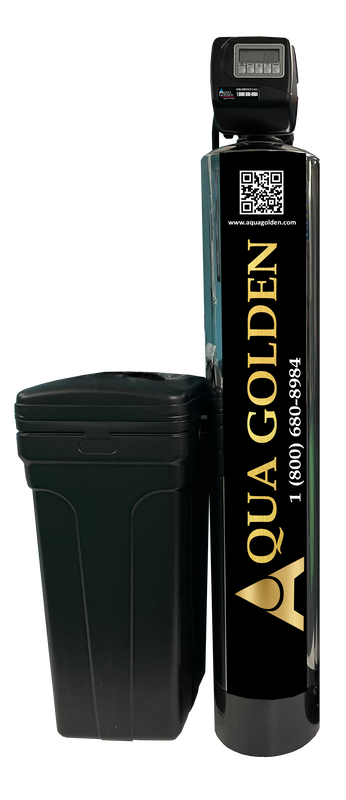
SP3 Combo System - Water Conditioner

Picture
GREEN, HEALTHY SALT-FREE SYSTEMS

Scale Prevention & Reduction

SP3 systems completely takes care of the primary cause of scale forming cations. SP3 systems are a environmentany friendly, cost effective solution for scale causing hard water. No backwashing, salt or electricity is required for yearly savings. SP3 systems keep healthy minerals in your water and combined with Filter Prep to remove contaminates like chlorine, pesticides, and metals.
​The SP3 system is a true health


How SP3 salt free systems work
When the hard water under goes nucleation in the pressure vessel, the calcium 'bicarhnate is transformed into aragonite form of calcium carbonate crystals. These crystals are formed through decomposition and crystallization process, forming very stable harmless crystals. These stable crystals are incapable of forming scale in your water. Not only does this process prevent scale buildup, it also removes existing scale in your plumbing. 
Foto

SP3 SYSTEM

Protect Your Home and Prolong the Life of Your Appliances without the use of Salt or Harsh Chemicals

Traditional water treatment systems require ongoing maintenance and salt refills. Lifting heavy bags can be tough for many people and regenerating with gallons of water add extra cost to owning a softener system. Charger’s Scale Prep system allows you to enjoy many of the benefits of soft water without the headache.

Preserve Beneficial Minerals

Because the Scale Prep system does not use ion-exchange to completely remove the calcium and magnesium from your water, these good minerals are left in for drinking and cooking.

Virtually No Maintenance

With no filter changes, salt additions, or adjustments, the Scale Prep system from Charger is as easy as they come.

Chemical and
​Salt-Free

No added chemicals or salt means ease-of-use and a healthier home.

Saves on Soap & Energy

You will enjoy soap and energy savings when you reduce scale buildup throughout your home.

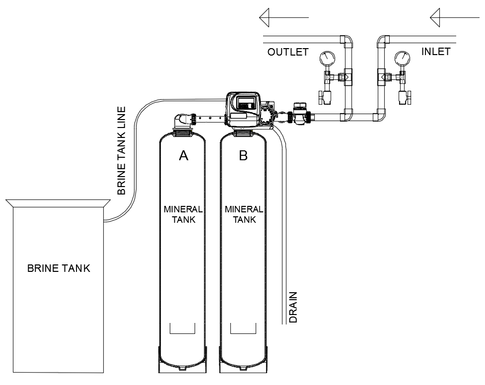
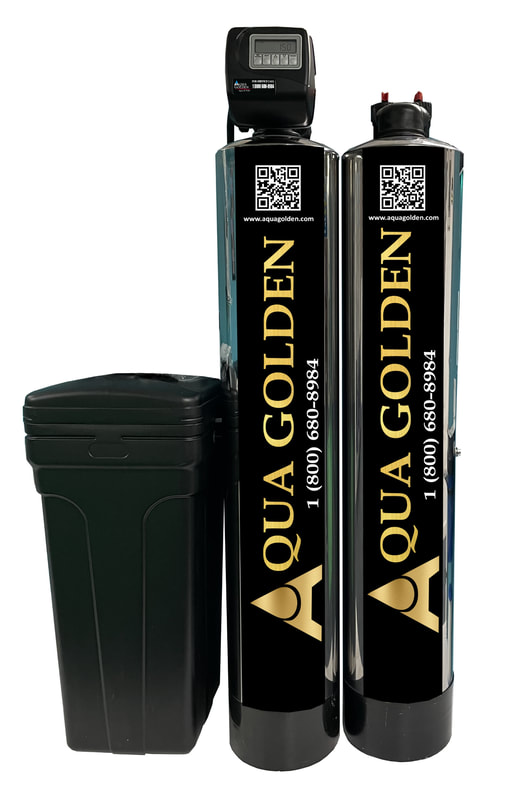
The double tank system is ideal for families of more than 4 people and where there is high water hardness. Also where there is well water.
PictureDUAL TANK

WATER SOFTENER DUAL GOLD - WS1 SYSTEM
​​A dual-tank softening system takes the water purification process one step further, containing a water softener tank and a second granular activated carbon tank. The reason a dual-tank softening system should be used is because it extends the life of the water softener, saving you money. Also when tap water is filtered through the softener, the resin in the softener removes many impurities from the water. However, one contaminant in particular, chlorine, reduces the life of the resin beads inside the water conditioner. The carbon tank acts as a pre-filter and can remove all chlorine from the tap water before the water enters the softener. This extends the life of the resin beads, making your system last up to 50% longer!

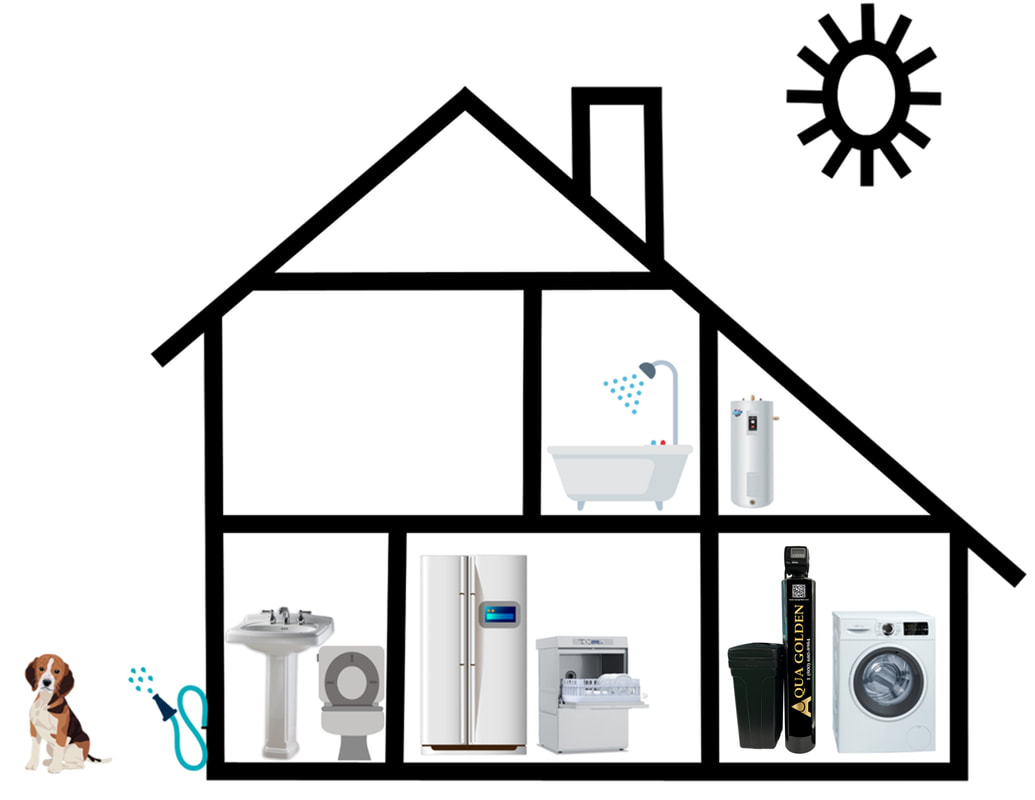
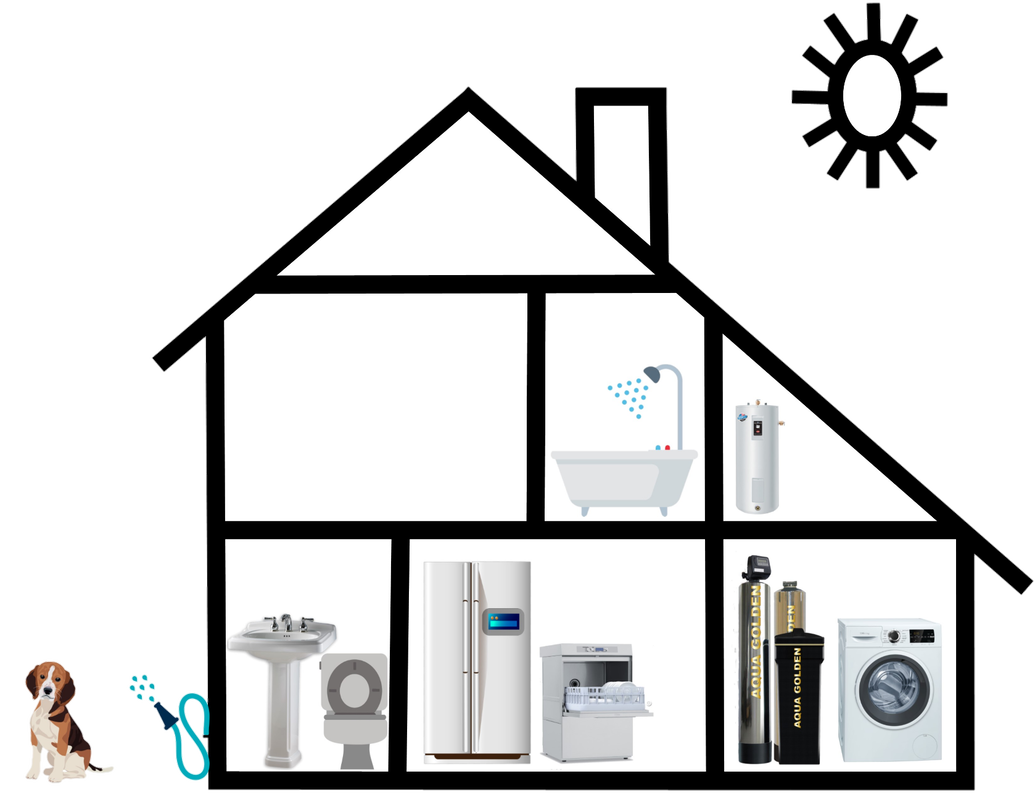
​Aqua Golden water purification system is an essential product necessary for use in all parts of the home:
  • Bathroom: The Aqua Golden water purification system produces soft water that helps lather up soap and shampoo. This makes them more effective at cleaning, while using fewer products to save money. Also, the skin and hair will feel softer and not as dry. The system will also prevent mineral deposits and soap scum from building up in bathtubs, sinks, showers, bathtubs, and toilets. Using the Aqua Golden water purification system will also save time and money, as these areas will not need to be continuously cleaned.
  • Laundry - Washers will do a more efficient job cleaning because they will use less detergent and produce better cleaning results by up to 33%. Clothes will be cleaner, shinier, and last much longer than hard water. The washing machine itself will also last longer because there will be no accumulation of hard water in the machine.
  • Kitchen - Dishes will clean faster and require less detergent to get the job done. They will also be free of stains and films because hard water deposits will be removed. The dishwasher will last longer too, saving money everywhere.

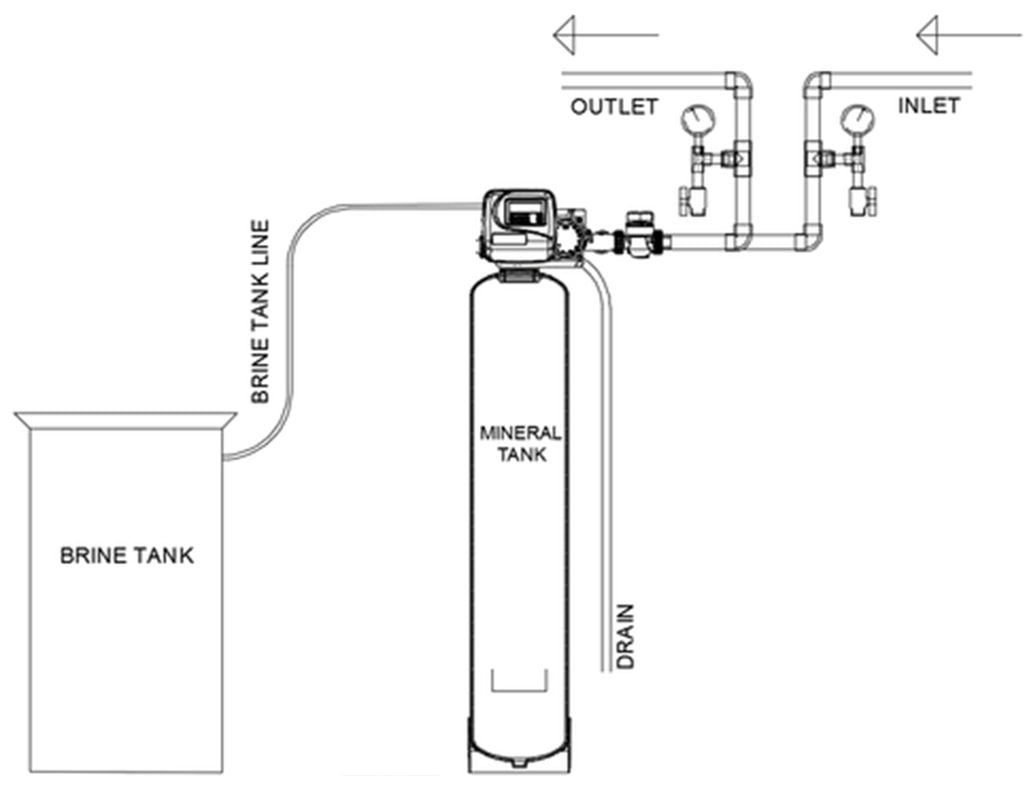
TYPICAL RESIDENTIAL INSTALLATION
Picture
Picture
SECOND TANK
​
​Upflow Activated Carbon Whole House Water Filter

  • Excellent for use in dechlorinating water and removing many tastes and odors.
  • Removes chloramines with the optional Catalytic Carbon upgrade (WELL WATER)
  • Much longer life and higher flow rates than carbon filter cartridges.
  • No waste water, no backwash needed.
  • Non-electric.
  • No maintenance required, carbon media lasts for years.
  • ​High activity granular activated carbon is manufactured by steam activation from select coconut shell charcoal.
  • Removes low molecular weight organic compounds and their chlorinated by-products such as chloroform and other trihalomethanes (THM's).
  • Removes chloramines with the optional Catalytic Carbon upgrade (WELL WATER)
  • Iodine Rating: minimum 1000 mg/g

THE ADVANTAGES OF THIS SYSTEM AT HOME

  • Fresh water forever
  • Healthy skin and hair
  • Pure and safe water.
  • Increase the value of your property.
  • Eliminates hardness from water.
  • It pays for itself
  • Extend the life of your clothes
  • Protection against all contaminants.
  • Eliminate chlorine
  • Retains "good" and removes "bad"

TELLTALE HARD WATER SIGNS:

Picture
Limescale or soap scum buildup
Picture
Pipe or plumbing corrosion
Picture
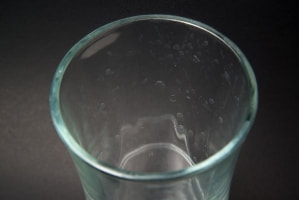
Dishes with streaks or water spots
Picture
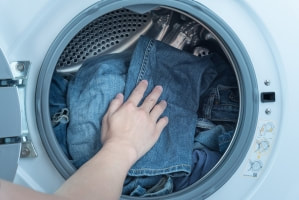
Stiff laundry after washing
Picture
Dry/Itchy skin
Picture
Flat, frizzy or coarse hair

Water Conditioners vs Water Softeners: Which is Right for Your Home


​The terms “water conditioner” and “water softener” are often used interchangeably, but they are two very distinct methods of water treatment. While both can be used to prevent limescale buildup and hard water damage to plumbing and appliances, water softeners offer additional benefits beyond scale prevention. Some homes may be more suited to a water conditioner than a water softener, and others may need to reap the benefits a water softener provides. Below you can find information about the differences between water conditioners and water softeners, the advantages each possess over the other, and which applications best suit each treatment solution.
What does a water conditioner do?
A water conditioner is a system that prevents the buildup of limescale in plumbing by changing the chemical makeup of the water. It doesn't actually soften water, yet it is often referred to as a "salt-free water softener". The system uses a template-assisted crystallization (TAC) media to catch minerals like magnesium and calcium. These minerals build up until they break off into the output water. This makes the water still hard, but it can't stick to pipes and appliances.
How does a water conditioner differ from a water softener?
The most obvious difference between a water conditioner and a water softener is the absence of salt in a water conditioner, but the differences do not stop there. These two systems differ in the amount of water they use, the contaminants they remove, the contaminants they add, their effectiveness against limescale, and their cost.
Water use
Water softeners contain resin beads that exchange their sodium ions for hardening ions in water as it passes through the system. Once the resin beads lose their ability to exchange ions, a salt solution backwashes through the beads to rejuvenate the resin. This process flushes about 20 to 25 gallons of salt solution into the wastewater line. While this may seem like a significant volume of water, limescale caused by hard water can cause appliances to become less efficient, using more water than their limescale-free counterparts. In the long term, a home with a water softener can use less water than a home without any water hardness treatment.
In contrast to water softeners, water conditioners do not produce wastewater. Rather, they cause calcium and magnesium crystals to form in nucleation sites within the TAC media. This process does not require flushing at any point, wasting no water in the treatment process. Water conditioners are not as effective at preventing limescale buildup as water softeners, so water can be wasted if limescale forces appliances to work harder than normal. However, a water conditioner offers a significant improvement over no treatment system at all.
Contaminants removed
Water softeners physically remove hardening minerals from water, but water conditioners simply change the chemistry of these minerals. In addition to crystallizing calcium and magnesium, water conditioners can remove chlorine, a chemical found in city-treated water that causes a foul taste and odor.
Contaminants added
While water softeners remove calcium and magnesium from hard water, they replace these minerals with sodium. A true water softener must use salt to exchange ions within the water. Water conditioners do not exchange any ions, and, as a result, do not use salt to treat water. These systems do not add any outside elements to water. Instead, they change the structure of the minerals already found in the water.
Effectiveness against limescale
One of the main purposes of water hardness treatment is the reduction of limescale buildup in the plumbing of a home. Both water conditioners and water softeners provide protection against scaling in plumbing, but water softeners are slightly more effective. Because conditioned water is not soft, the calcium and magnesium remain in the form of crystals. Given enough time, the calcium and magnesium will revert to the same chemical structure they were in before conditioning. This leaves plumbing susceptible to limescale buildup. Soft water does not contain the minerals needed to form limescale, so the risk of buildup is eliminated with a water softener.
Cost
Water conditioners and water softeners share similar upfront costs, but water softeners require more maintenance costs than conditioners. 
When should I use a water conditioner instead of a water softener?
​
Because they do not truly soften water, water conditioners cannot compete with water softeners if soft water is your primary objective. However, water conditioners do provide advantages that make them preferable to water softeners in certain situations.
1.   In locations where water softeners are illegal
Water softeners use a salt-water solution to recharge the resin beads within the system. The byproduct of this process is a brine that flushes into the city wastewater lines. In some states and cities, water softeners are banned because the wastewater produced is difficult to treat. California, Texas, Michigan, Wisconsin, and Massachusetts all have bans or restrictions on water softeners. Individual municipalities also possess their own regulations on these systems. Water conditioners, unlike water softeners, do not produce wastewater that is difficult to treat. In locations where water softeners are banned or heavily regulated, a water conditioner is a viable anti-scaling alternative to a water softener.
2.  In environmentally friendly applications
Because water conditioners do not produce extremely salty wastewater, they are more environmentally friendly than water softeners. The chlorides water softeners inject into wastewater are difficult for treatment plants to remove. It takes as little as one teaspoon of sodium chloride to substantially pollute five gallons of water. As water softeners continue to recharge over time, more salt is added to city water, increasing the treatment difficulty each recharge.

Water conditioners, on the other hand, do not release chlorides into wastewater. In fact, they do not produce wastewater at all. This means water conditioners not only prevent harmful salts from flowing into city water, but they also use less water than water softeners.
3.   When scaling is the only concern
Water conditioners do not soften water. Instead, they cause the magnesium and calcium in hard water to crystallize. These minerals are still present in conditioned water, but they are not able to coat pipes or appliances. Conditioned water’s taste, feel, and effects on the body remains unchanged. If scaling is the only concern with your hard water, a water conditioner may be the right choice for you.
4.   If you are on a low-sodium diet
Low-sodium diets are a common method to treating elevated blood pressure. Water softeners exchange sodium ions for hardening ions when water passes through, ultimately adding sodium content to the softened water. If a water softener is the only treatment method used in your home and you are on a low-sodium diet, the sodium content in water produced by a softener can cause adverse effects.
If you are only concerned with scaling in your home and do not mind the presence of calcium and magnesium in your water, you can use a water conditioner in place of a water softener. This will ensure that only naturally occurring sodium will be present in your water. If you want to guarantee your water contains as little sodium as possible, a reverse osmosis system implemented after your water softener or conditioner can reduce levels of sodium, iron, lead, and most other contaminants in water.
​5.   If you do not need a point-of-entry system
Water softeners are point-of-entry systems, meaning they treat all water that enters a home. Water conditioners, on the other hand, can be either point-of-entry or point-of-use systems. A point-of-use system is an application-specific water treatment solution that can be installed for faucets or individual appliances. One common location for point-of-use water conditioners is pre-treatment for a hot water heater. Water heaters are more susceptible to limescale buildup than other appliances because they deal with hot water. Vaporized water leaves behind calcium and magnesium, causing limescale buildup to proceed faster than in room-temperature water. If your water heater struggles with limescale, but you do not notice scaling elsewhere in your home, a point-of-use water conditioner may be right for you.
When should I use a water softener instead of a water conditioner?
Water softeners are the only true water-softening systems available because salt must be used to remove hardness minerals. Consequently, they are preferable to applications where soft water is needed.
1.   When you need truly soft waterWater softeners, unlike water conditioners, produce water that is free from hardening minerals. Soft water prevents the many effects hard water can have around your home, such as limescale buildup, itchy skin, flat hair, spots on dishes, faded color in clothing, and soap scum buildup. Water conditioners are designed to prevent limescale buildup by crystallizing calcium and magnesium, but they do not remove these minerals, meaning their effects outside of plumbing preservation remain. Only using a water softener provides the benefits that soft water can provide.
2.   When you use well water
Well water is oftentimes very high in hardness, but a water conditioner cannot be used on well water. Iron and manganese are prevalent in wells, and these minerals are tough on the interiors of water conditioners. These minerals block the TAC media in water conditioners, preventing the calcium and magnesium from crystallizing. When left untouched, the calcium and magnesium coat plumbing inside the home, causing the limescale issues the conditioner was intended to prevent.
Water softeners can remove small amounts of ferrous iron from water, but they cannot remove ferric iron. High levels of iron in water can clog the resin beads inside a water softener, shortening the system’s lifespan. To prevent the effects of iron on a water softener, a chemical solution must be backwashed through the resin beads to cleanse them from the iron content. An effective filtration method for removing iron from well water is reverse osmosis, a system commonly used in conjunction with water softeners.


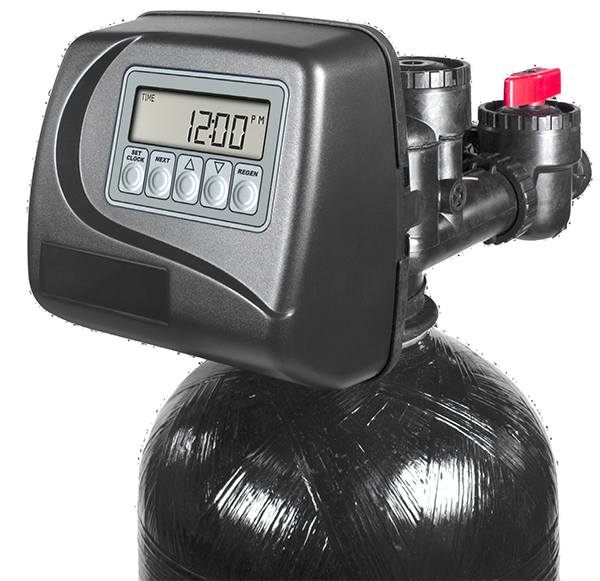
CLACK WS1 
WATER SPECIALTY CONTROL VALVE

CERTIFIED TO NSF / ANSI 44, 61 AND 372
PictureClark WS-1
  • Solid state microprocessor with easy access to front panel configuration
  • Three modes of operation; Immediate Meter, Delayed Meter, or Delayed Timed Clock
  • Dual backwash feature offers optimal regeneration, cleanability and efficiency
  • Capable of 36 pre-programmed regeneration cycles based on control valve settings
  • Day override function; 1 - 28 days available • Backwash and brine capacity for 21 "diameter tanks
  • Downstream / Upflow Regeneration
  • Stores system configuration and operating data in non-volatile memory
  • Backup lithium Coin Cell battery with an 8 hour transfer
  • Level VI 15 volt output DC power supply provides safe and easy installation
  • Control valve design provides optimal service and backwash rates
  • Recharge of regenerator of pre or post treated water
  • One Piece Patented Expandable Seal Spacer Stack Assembly US Patent 6,402,944
  • Patented reciprocating linear piston operation US Patent 6,444,127
  • Reliable and proven DC drive

MANUAL CLACK WS-1
File Size: 2933 kb
File Type: pdf
Descargar archivo

Picture

Contact:
​​(559)424-5810​
CSLB # 1053219

​MAIN OFFICE:
AQUA GOLDEN LINE, INC.
3582 West Holland Ave, Suite # 101
Fresno CA 93722

(800) 680-8984
​[email protected]
​

Picture
Picture
Picture
Picture
We serve Northern and Central California
About Us
Water Problem
​- Contaminants
​Water Test
FAQ
Joint
​Reward
Financing
Contact
​Water Solutions
​- Whole House System
​- Water Drinking System
- Ionized Water System
- Perfect Combination
- Ionic Laundry
- Air Purifier
​- Natural Products
- Cookware
COPYRIGHT © 2020 AQUA GOLDEN LINE INC. / ALL RIGHTS RESERVED WORLDWIDE


​Disclaimer of Liability

This content is not intended to be a substitute for medical advice, diagnosis, or treatment. Always seek the advice of your physician or other qualified healthcare provider with any questions you may have regarding a medical condition. The information provided is for information only and is not intended to replace the advice provided by your own physician or other medical professional. You should not use the information or products contained in this document to diagnose or treat a health problem or disease, or to prescribe any medication. Information about our alternative health products has not been evaluated by the Food and Drug Administration (FDA) and is not intended to diagnose, treat, cure, or prevent any disease.​"​
  • Water Problem
    • Contaminants
  • Water Solutions
    • Whole House
    • Digital alkaline reverse osmosis
    • ionized water system >
      • Platinum
      • Biontech
      • Platinum Genius
      • how to use the ionizer
    • Perfect Combination
    • Platinum Ionic Laundry
    • Platinum Air Purifier
    • Cookware >
      • Nutri-Stahl
      • Platinum
    • Natural Products home/personal
  • water test
  • Home Improvement
  • Reward
    • Referral Program
  • Financing
    • Apply
  • Contact
    • About Us
    • Join
    • Privacy Policy